When Bo Xu showed up at the Lally School of Management in 2013, he wasn't chasing just any degree. He wanted a program that could bridge two very different worlds: rigorous quantitative finance and the real, on-the-ground business problems that come with it.
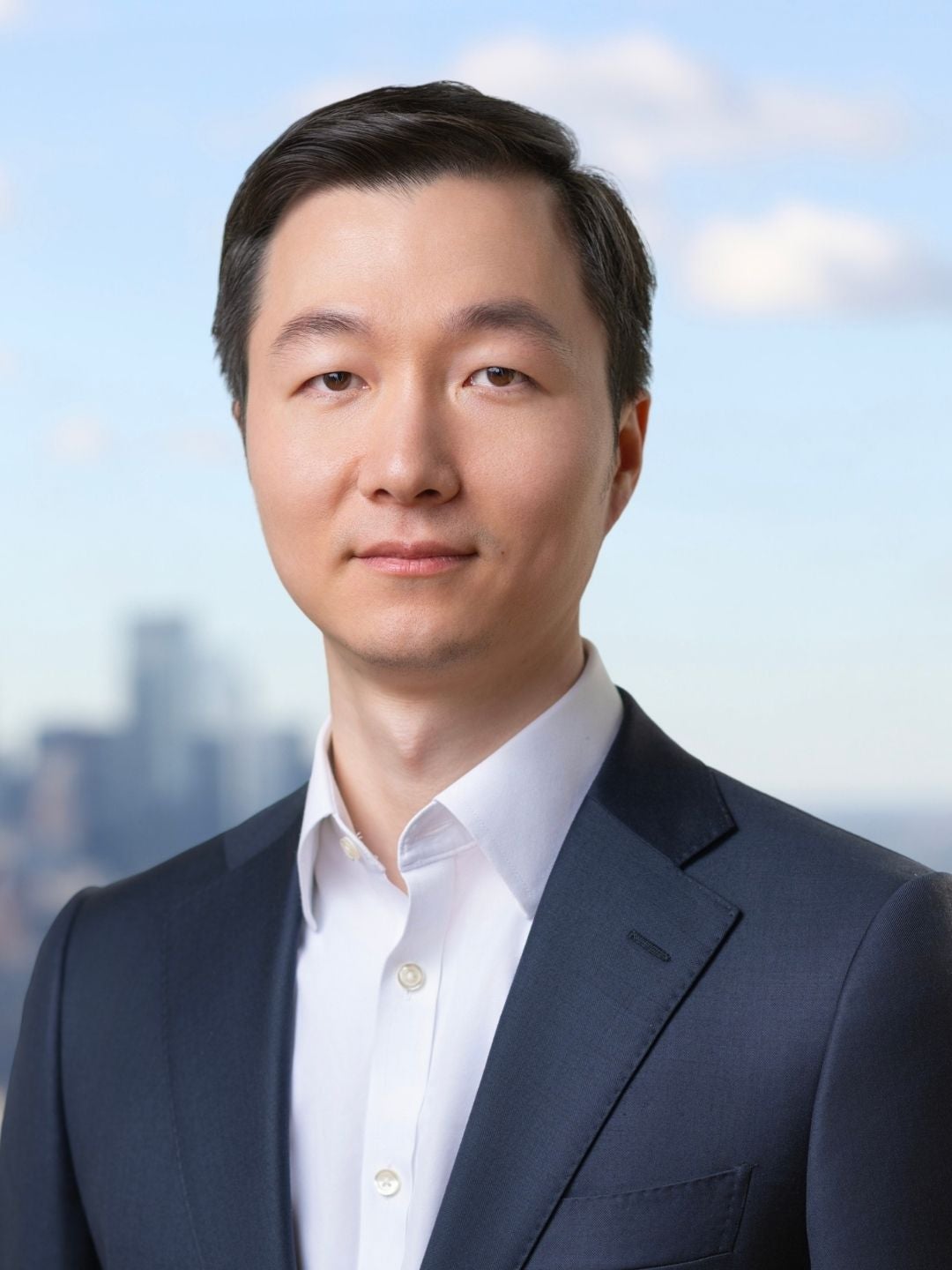
After finishing his undergraduate degree in economics back in China, Xu already knew two things. He wanted to pursuit a career in Finance, and he'd need much stronger quantitative chops to compete with the best in US financial industry. A standard finance degree wasn't going to cut it. He needed something that mixed finance with math, technology, and practical business application.
That search is what eventually brought him to Rensselaer Polytechnic Institute and Lally's graduate program in Financial Engineering and Risk Analytics, the program now known as Quantitative Finance and Risk Analytics, or QFRA.
"I wanted to get a master's degree in quantitative finance," Xu said. "Since I was not coming from computer science or engineering background, I knew it would be challenging but worth it."
He had other options on the table too, including offers from a couple of well-known programs elsewhere. But Lally won him over for two reasons. First was the curriculum itself. Courses that combine financial product knowledge, technical rigor and real-life business application lined up almost perfectly with what he was looking for. Second, and maybe more important, were the people. Before he'd even set foot in Troy, Xu was already chatting with current students and alumni who answered his questions, walked him through what the program was really like, and even hopped on video calls to show him around campus.
"That was super heartwarming," he said. "Overall, I felt like it was a very welcoming culture and academic-driven environment. That really helped me make the decision."
Finding His Foundation at Lally
Once classes started, the value of the program became obvious pretty fast. Two courses in particular stuck with him and shaped how he thinks about quantitative finance to this day.
The first was a course on options, futures, and derivatives. It gave him a framework to connect financial products to the math underneath them: how a derivative gets assembled, how fair value calculated, and how profit and risk measured in real-world metrics.
The second was a financial simulation course taught by Professor Gupta, and it pushed him harder than almost anything else in the program. It was his first time touching MATLAB, so he had to learn the programming language from scratch while also wrestling with quantitative concepts at the same time.
"I understood the theory fairly quickly," he said. "But implementing it in programing language was the challenging part."
Eventually, all that effort turned into one of his favorite academic memories. "When you see that simulation path on your laptop and fair value was calculated, that was an accomplishing moment," Xu said.
That hands-on moment is really what clicked for him about what financial engineers do day to day. It also set him up well for his first job out of school, doing credit risk analytics at KPMG.
As Xu puts it, QFRA was never just about memorizing formulas. "The core of it is linking quantitative methods with real-life finance problems," he said.
That practical mindset stuck with him long after graduation. Lally gave him a solid grasp of financial products, hands-on skills in financial computing and simulation, and a taste of the business side through courses like accounting and financial reporting. Put it all together, and he says it's what turned him into a practical financial engineer rather than just someone who's good with formulas.
Learning to Adapt and Lead
Xu graduated from Lally in December 2014 and started at KPMG next February as an associate in risk consulting practice. His day-to-day work centered on credit risk analytics and quantitative modeling, basically a direct continuation of what he'd studied at Lally.
Over the next four years, Xu’s responsibilities expanded significantly. He moved beyond pure analytics into advisory and transformation work, gaining client-facing experience and addressing a broader range of business challenges beyond finance. This evolution prepared him for his next step: joining Boston Consulting Group, one of the top three management consulting firms, where he entered the firm’s technology strategy practice.
Things moved fast at BCG. Xu worked mostly on digital transformation projects with large financial institutions and insurance clients, then pivoted toward data and AI strategy, eventually becoming one of BCG's go-to people for such topics. He got promoted twice along the way and left the firm as a principal.
Looking back, Xu can draw a pretty clear line between Lally and every stage of his career since. His technical training got him in the door. His years in consulting taught him to adapt on the fly. And the leadership chances he picked up along the way taught him how to earn people's trust.
One lesson he learned early, and one he still believes, is that leadership starts well before anyone hands you a title.
"In order to show your leadership, the first thing you need to do is show your value," he said. "At the early career, you need to demonstrate that you can solve problems effectively and reliably. You might not have all the expertise, but you definitely have the attitude, the growth mindset, and the quick learning ability."
That mindset is part of why he is willing to take on responsibility early. Consulting life means new projects, context, clients, and demands constantly, and there's nowhere to hide. It also put him in the room with senior leaders, where he could gain insights on how they communicated, made decisions, and steered their organizations.
The moment that really changed things for him came at BCG, when he got promoted to project leader. For the first time, he was on the hook for leading a project team and delivering results straight to the client. The project was a six-week strategy engagement for an insurance company, and it put him in charge of several junior consultants while the partners kept a close eye on the work.
The pressure was real. But the way it turned out ended up being a turning point for him.
"When the project successfully wrapped, and the clients said, 'Great job, you know what you’re doing' I felt like, okay, I can be a good team leader," Xu said.
That experience helped him push past some of the self-doubt that comes with being young, ambitious, and figuring out how to work across cultures all at once. He also started noticing a real difference in cultural expectations. In his experience, a lot of East Asian professionals are raised to wait until opportunities are handed to them, while American work culture tends to reward the people who ask for a shot to prove themselves.
That realization changed how he thought about leadership going forward.
"I want this. I think I deserve this. Can I get an opportunity to prove myself?" he said. "That is a bit of a cultural difference."
Mentors Who Made the Difference
None of this happened in a vacuum. Along the way, a handful of people helped Xu find his footing, both academically and professionally.
At Lally, he points to graduate advisor Sonia Francis as a key mentor, especially during those first few months when international students were trying to adjust to a new country, a new academic system, and a whole new social scene all at once. She was the one fielding questions about course selections, GPAs, visas, and what life in Troy was really like.
"The first few weeks are critical," Xu said. "You are in a brand-new environment. Some students are abroad for the first time. Helping them get ready during that time makes things easier after that."
He also gives a lot of credit to Professor Brian Clark. Xu actually stayed in touch with Clark long after graduation and even came back to speak in one of his classes. What he appreciated most was Clark's real-world professional experience and his practical way of approaching problems.
"We talked a lot about the difference between school and the real world, and his professional life as a bank examiner," Xu said. "He helped me think through problems and set up the foundation for how I approach problem solving."
For Xu, mentorship was never just about getting advice. It was about gaining perspective, the kind that comes from seeing how a concept plays out in a business setting, with real clients, real financials, and real profit vs. risk.
That's part of why he feels so strongly about alumni staying involved. As a student, he got real value from hearing from people who'd worked in the field. Now that he's on the other side of that, he wants to give current students the same thing.
"I am always looking for an opportunity to give back," he said. "I benefited a lot from RPI. I went here, started my career in the U.S., and built a good life."
Building AI Strategy in Banking
In January 2026, Xu made another big move, this time leaving consulting altogether to join East West Bank, a large regional bank headquartered in California with operations spanning the United States and Asia. These days, he's leading strategy and execution for Bank’s data analytics operation, and helping shape the bank's broader AI strategy.
The shift from consulting into industry wasn't an accident. Xu wanted to complement his strategy expertise with execution rigor. His current focus is helping the bank use data analytics and AI to spot growth opportunities and enable bankers and branch teams to be more productive. What draws him in most is how concrete the work actually is.
"This is something you can measure in dollar terms," he said. "How many new business leads identified through analytics? How many hours every week can we save for bankers? And how fast AI can accelerate an existing manual process"
To Xu, getting AI adopted in banking is really a business challenge dressed up as a tech challenge. That belief is part of why he chose East West Bank in the first place. He had other offers on the table, including larger financial institutions and insurers, but he wanted to work where decisions could be more nimble, and his work could make a visible difference quickly.
"Adopting AI is less about technology and more about change management," Xu said. "Here, the organization is much flatter, and decision-making could be much faster."
That decision says a lot about a bigger lesson Xu has picked up over his career: the best opportunity isn't always the biggest name or larger team. For him, the right opportunity is the one where he can create tangible value, push ideas forward, and help an organization grow.
Leadership as Shared Problem-Solving
Building a brand-new team at large corporation comes with its own set of leadership challenges. How to align strategic goals with other leaders? How to bring people along and incentivize them to adopt new ideas and ways of working? Instead of managing these as problems, Xu treats them as a chance to combine perspectives.
He brings a consulting background, a wide-angle view of how the industry works, and an approach shaped by years spent across financial services and technology strategy. His team members bring something he doesn't have: deep institutional knowledge and human network across the bank. The point, he says, isn't to figure out who can do or knows more. The point is to bring the best out of everyone and solve the problem as a team.
That approach gets at one of Xu's core beliefs about leadership. Leaders need to bring something to the table, sure, but they also need to listen. They need strong opinions of their own, but they need to be willing to bend when someone else clearly knows the organization or the context better.
"Don't make early judgments on who is right or wrong," he said. "Always share, until I know better."
Still Learning, Still Building
Outside of work, Xu likes to cook Chinese food, watch sports, and spend time with his wife Iris. He's also constantly poking around new fields, AI, geopolitics, space technology, whatever catches his interest these days. That same curiosity shows up in his professional ambitions too.
His long-term goal is to become a CDAO (Chief Data & Analytics Officer) or CIO (Chief Information Officer) at a major organization. It's a goal that ties together pretty much everything he's done so far: finance, technology, data, AI, leadership, and business transformation.
He is still learning, still building, and still looking for new ways to create value. That mindset is also shaped by ideas he is drawn to outside of work. One movie that stayed with him is Margin Call. Although it is centered on the financial crisis, what resonated most with Xu was a different lesson: the importance of connecting the dots before anyone else does.
"It made me think about how I want to work in financial services and banking, and how I connect the dots between technology and business problems," he said. "How do I make myself valuable, using technology as a weapon?"
That question pretty much sums up his whole career. At Lally, he learned how to connect financial theory with quantitative methods. At KPMG, he put those methods to work in risk analytics. At BCG, he connected technology strategy with business transformation. And now, at East West Bank, he's using AI and analytics to help shape what banking looks like next.
For current and future Lally students, especially anyone in the QFRA program, Xu's story is a good reminder that technical skills matter, but they're only the starting point. The real edge comes from learning how to adapt, communicate, lead, and apply those skills to problems that matter.
Lally gave Xu his foundation. His mentors helped him see what was possible. And the rest of his career has been built by stepping forward, asking for responsibility, and proving he could deliver on it.
Now he's ready to give back and help the next generation of Lally students do the same.
Author: Lynda Holt, holtl3@rpi.edu